A collaboration pitch usually dies at the same point. Someone on the partner brand's side reads a paragraph describing a co-branded box, a launch post, a kit that would ship to press, and has to picture all of it herself. Most people cannot picture a design from a description, so the email gets a polite pass or no reply at all, not because the idea was bad but because nobody actually saw it.
Below is the version of that pitch where the brand doesn't have to imagine anything. Your product photo and something of theirs, in, three mockups and a pitch email out. None of it is a real product yet. It is a concept, built to be looked at, not read.
What makes a brand say yes to a collab pitch?
Seeing it, before anything else. A partnerships inbox gets pitches every week that are all concept and no image, and those get triaged fastest because there is nothing to forward internally. A pitch that arrives with a box, a kit, and a launch tile already attached is one a coordinator can forward to her creative director without writing a summary first. That is the entire advantage: you have done the part of her job that would otherwise stall the email in her inbox.
What do you need before you start?
Two things, and neither is permission.
- Your product photo. The real one, from your own product page.
- Something real of theirs. A product photo, a storefront or interior photo, whatever is publicly on their own website. Not a photo you have rights to use in a real campaign, just enough to mock up the idea honestly.
You do not need their agreement, a signed NDA, or a call booked first. A mockup is how you get the call booked. Just be clear, on the mockup and in the email, that it is a concept and not an announced product. That line is doing real work: it is what keeps this a pitch instead of something that looks like you already shipped a product using someone else's name.
The four steps
In order. Each one is a single message to Claude.
| Step | What you do | How long |
|---|---|---|
| One | Pull the real facts on both brands | 1 minute |
| Two | Build the three mockups | 4 minutes |
| Three | Write the pitch email | 2 minutes |
| Four | Have it read back as their side | 2 minutes |
Step onePull the real facts, do not invent the fit
The whole pitch falls apart if the reasoning underneath it is made up. Before any image gets built, have Claude read both brands' own pages and find the actual detail that makes the pairing make sense, rather than a fit you assert and hope holds up.
Step twoBuild the three mockups
This is the step that decides whether the pitch gets opened. Three things come out of it: the co-branded box, the kit as it would actually ship, and a launch tile sized for their own grid.
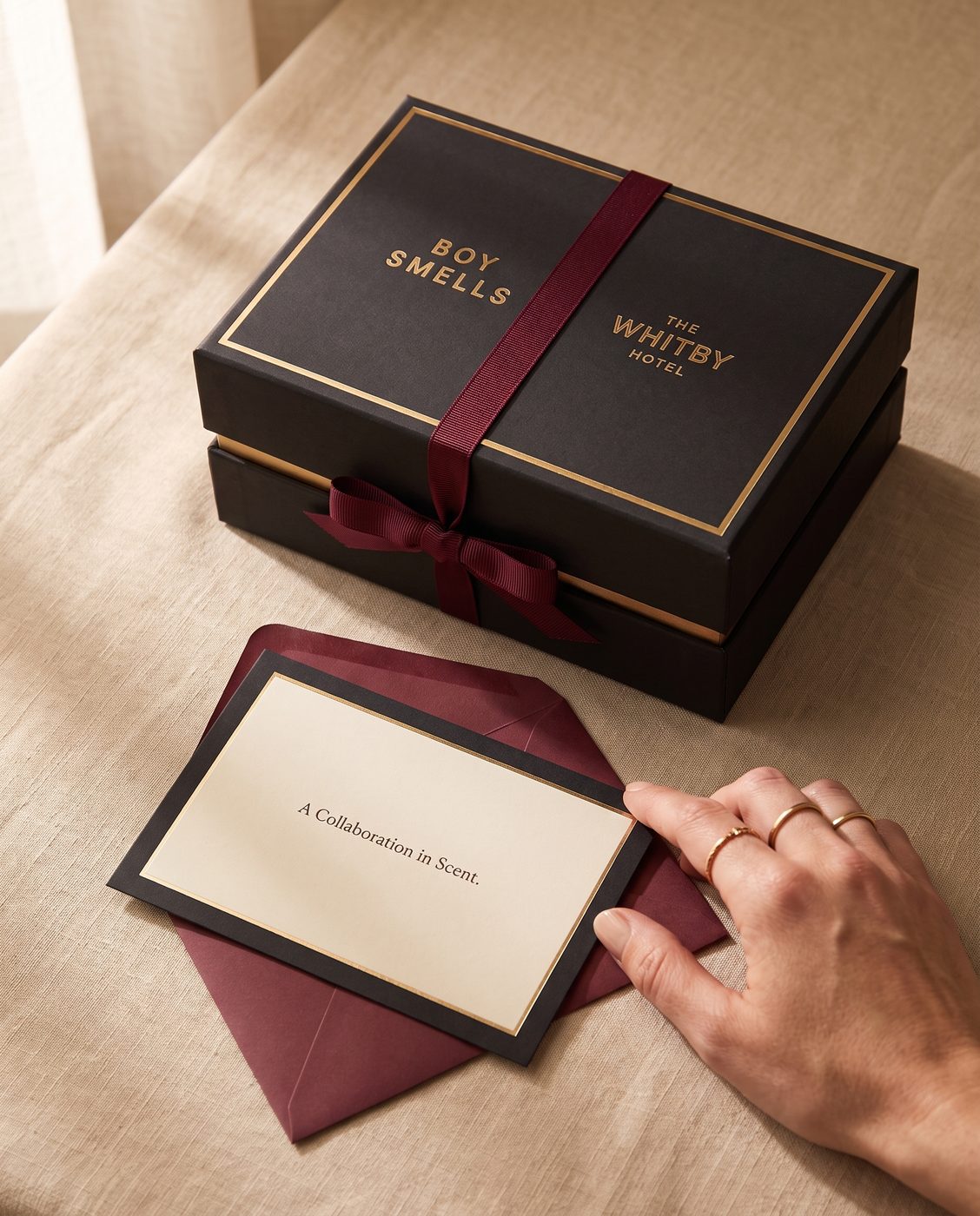
The boxBoth names, one shared palette pulled from what each brand already uses.
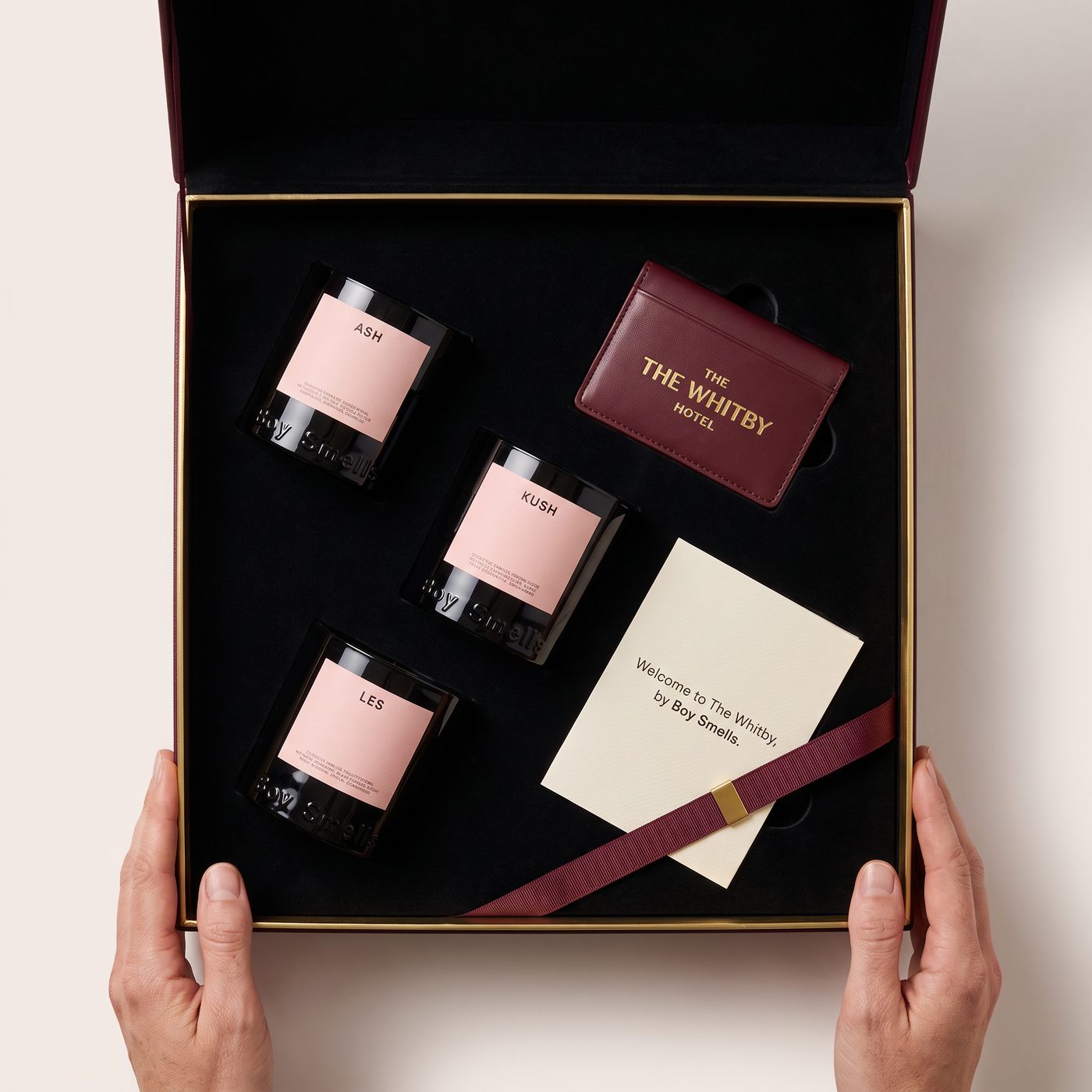
The kit as it would shipStyled like a press box that just arrived, not a rendering on a plain background.
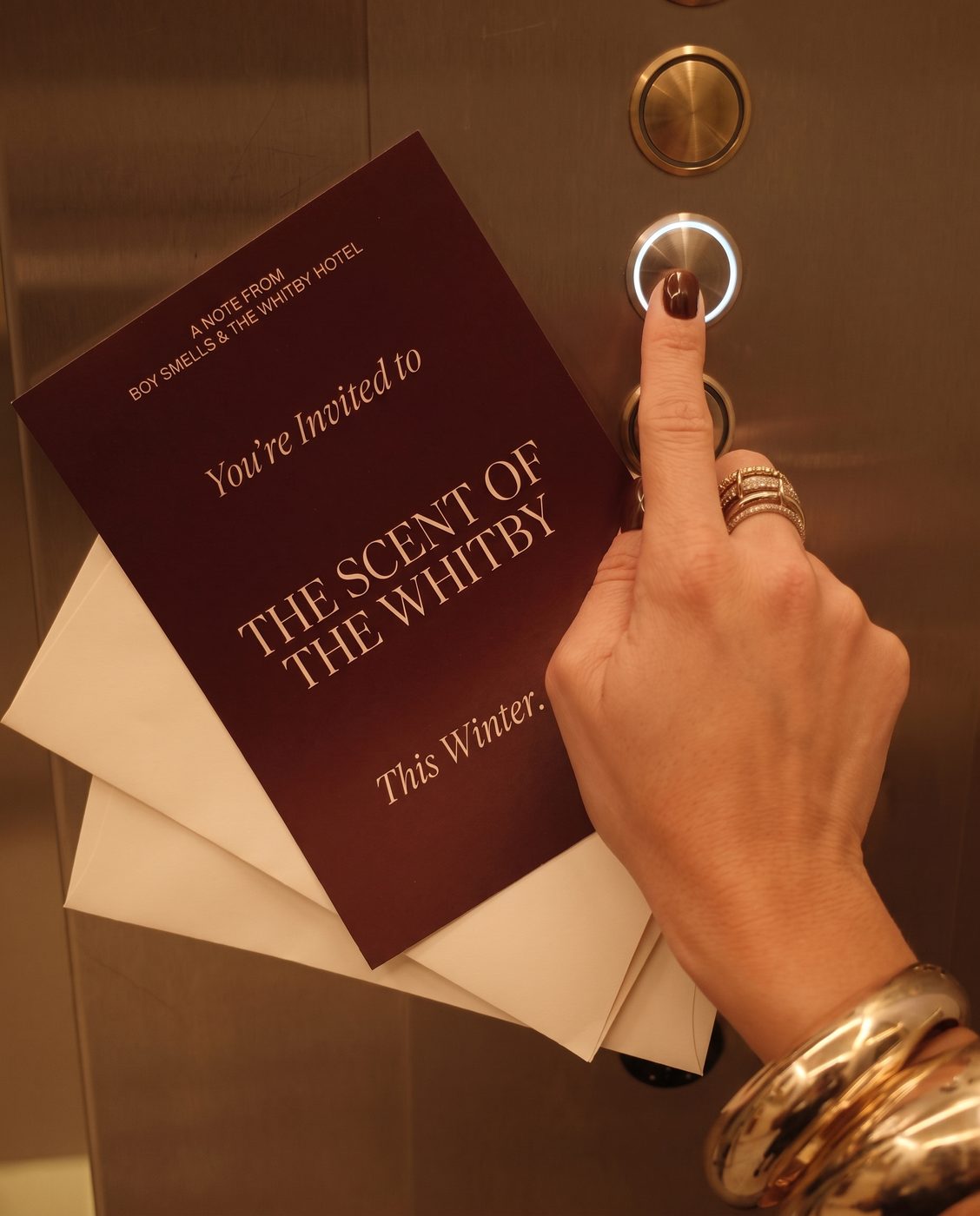
The launch tileSized and framed the way the partner brand already posts to its own grid.
Step threeWrite the pitch email
The email's only job is to be forwardable. Everything below exists so the person who opens it can send it straight to whoever actually decides, without rewriting it first.
Step fourHave it read back as their side
You already believe in the idea, which makes you the wrong person to judge whether it lands. Have it read cold, by someone whose job is to say no to most things.
OptionalA second format for their side to react toOptional
If the mockup earns a real conversation, having a second visual ready, a site banner or a second social tile, saves you from starting the visual work over once someone on their side actually wants to see more.
What did this look like as a real build?
I ran the four steps above with two real, unrelated brands neither of which is a client: Boy Smells, the candle and fragrance house, and The Whitby Hotel, a boutique hotel in New York. Boy Smells publishes exact scent notes on every candle label. Ash is woody and spicy, clove leaf, hay, palo santo, cedarwood, charcoal, patchouli. Les is fruity and floral, bergamot, black currant, peony, peach blossom, vanilla, cedarwood. That is a real detail worth building a pitch around: a hotel is one of the few places a scent gets to define a whole room, and Boy Smells already has three distinct moods sitting in its Icons line.
The pitch: Boy Smells proposes scenting specific rooms of the hotel with specific Icons candles, so a guest's memory of the space includes a scent they can actually buy afterward. The mockups built from that: a co-branded box carrying both names, a press kit styled as it would land on an editor's desk with all three candles and a hotel keycard wallet inside, and a launch tile recreating the kind of shot a hotel already posts, with the candle standing in for what would normally be a coffee cup.
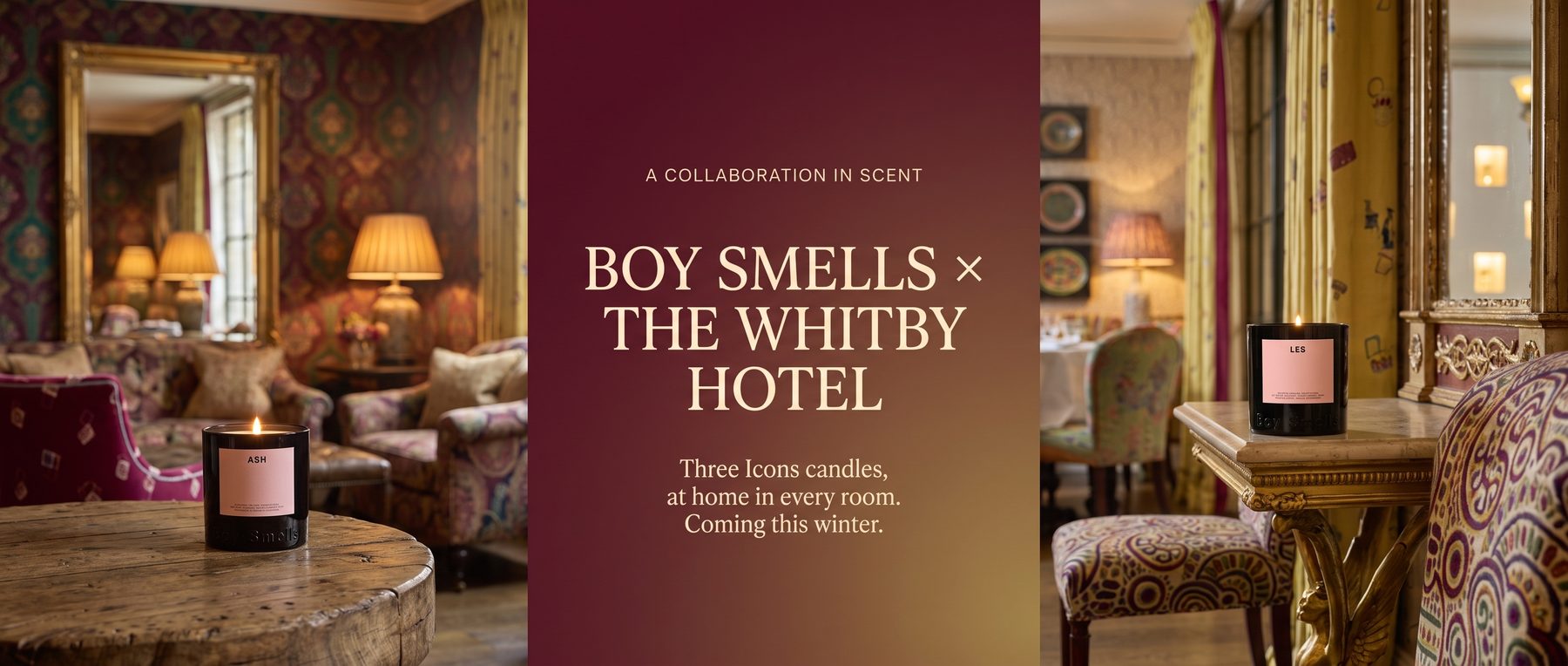
The optional extra formatA site announcement banner, built from the same two products and the same concept language.
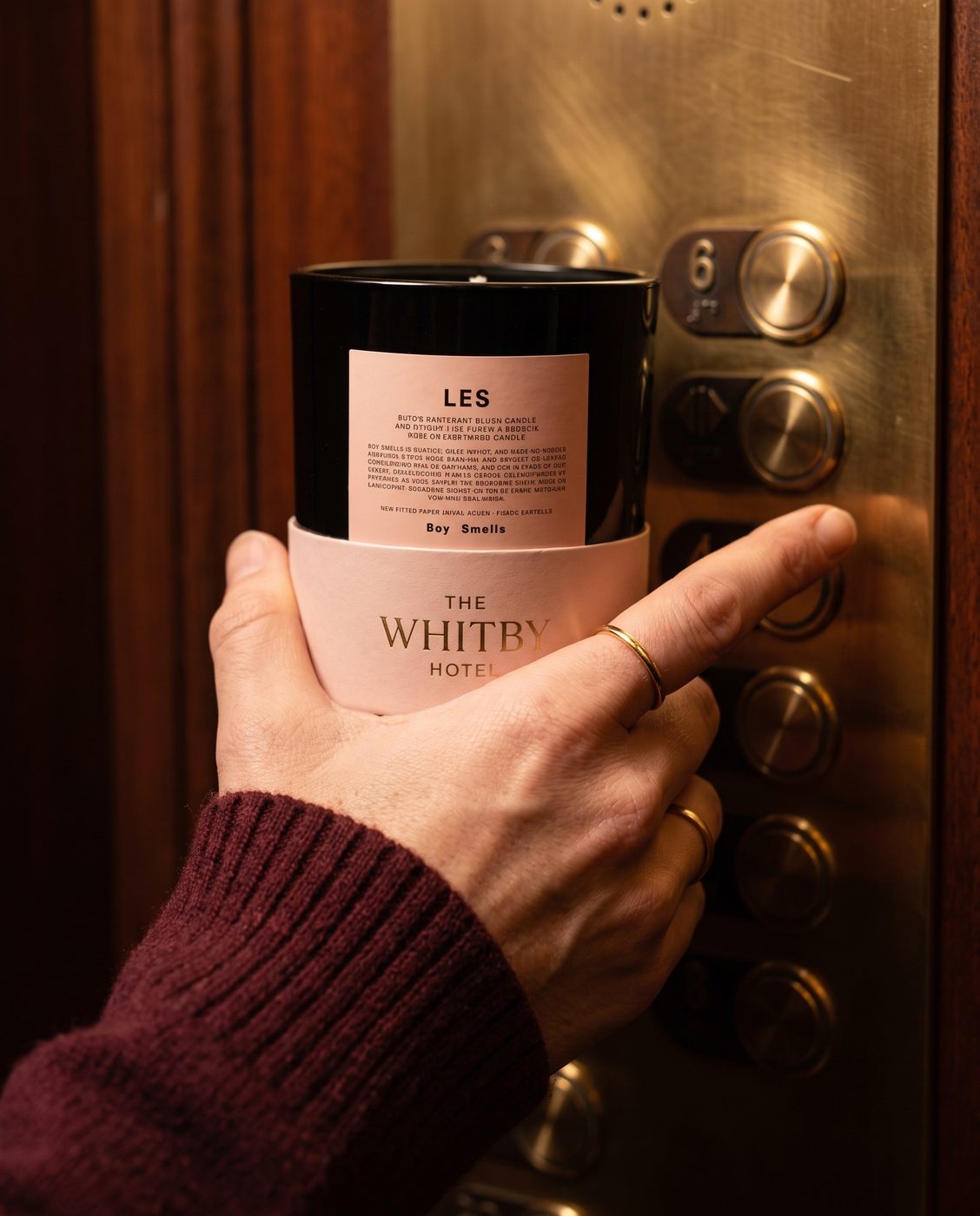
Second launch tileA different frame of the same concept, for a second grid post.
What is the prompt chain?
In order, so you can run the whole thing without stopping to think about what comes next.
| Prompt | What it does | What you get |
|---|---|---|
| One | Reads both brands' real pages | The one detail the pitch is built on |
| Two | Builds the concept mockups | Box, kit, and launch tile |
| Three | Writes the pitch | A one screen email, ready to send |
| Four | Reads it back as their side | Forward or no, and why |
| Five | Builds one more format | A banner or a second tile, optional |
What makes the difference?
- The fit is specific, not generic. "We both care about quality" convinces nobody. A real detail, like a scent note or a material both brands already use, does.
- Both products stay true to their real photos. A mockup that redesigns the other brand's product reads as presumptuous before anyone even opens the email.
- "Concept" appears on the mockup itself, not just in the email. The image gets forwarded on its own eventually. Make sure it still reads as a pitch once it's out of context.
- No invented date. Nothing on the mockup should claim a launch that has not been agreed to.
- The ask is small. A short call is something a busy person can say yes to in one line. A vague "let us know" is something she can ignore in one line too.
What does this replace?
Mocking up a collaboration pitch used to mean a freelance designer, usually a few hundred dollars and a few days' turnaround, just to visualize an idea that might get a no. That is the part this replaces: the cost of finding out whether an idea is worth having a real conversation about.
One honest limit. A strong mockup gets you a conversation, it does not get you the deal. What gets you the deal is a fit that makes sense for both audiences and terms that work for both sides. The mockup's only job is to make the idea easy to picture and easy to forward. It cannot make the answer come out yes.
The checklist before you send
- Both products true to their real photos, nothing invented or redesigned
- Every fact about the partner brand pulled from something they actually published
- "Concept" or "mockup" visible on the images themselves, not only in the email
- No real launch date anywhere
- Pitch email addressed to a real person or team, one screen
- The close asks for a short call, not an open-ended "let us know"
What makes a brand say yes to a collaboration pitch?
Seeing it before anything else. A partnerships inbox gets pitches every week that are concept only, and those get triaged fastest because there is nothing to forward internally. A pitch that arrives with a box, a kit, and a launch tile already attached is one a coordinator can send straight to her creative director without summarizing it first.
What should a collab mockup actually include?
Three things cover most pitches: a co-branded box that makes the pairing legible in one glance, the kit as it would actually ship rather than a clean rendering, and a launch tile sized for the platform the partner would actually post it on. All three should carry both real products, unaltered, and should say clearly that this is a concept.
Is it okay to mock up a collab before either brand has agreed to anything?
Yes, provided it is labeled as a concept on the images themselves and in the email, is not commissioned by or shown to either brand as if it were real, and does not put a launch date or price on anything. That is what turns it into a pitch instead of something that looks like an unauthorized product launch.
How long should a collab pitch email be?
One screen. One sentence on the specific reason the two brands fit, a note that the attached images are a concept, and a close that asks for a short call rather than an open-ended "let us know." The easier it is to forward without editing, the more likely it is to get forwarded.
The mockup described on this page was built as a demonstration using Boy Smells' publicly published product photography, scent notes, and product names, and The Whitby Hotel's publicly published photography. Neither Boy Smells nor The Whitby Hotel is a client of mine and I am not affiliated with either brand. This was not commissioned by or shown to either company, no real collaboration is announced or implied, and no launch date appears anywhere in the mockups.