The holiday gift set is the highest margin thing most brands sell, and it is also the one they commit to earliest. Boxes have minimum order quantities. Inserts have lead times. By the time you find out whether anyone wanted that particular trio, the trio is already in a warehouse.
The expensive part is not the products. You already make those. The expensive part is the box, the insert and the shoot, and all three get bought before a single customer has said the set is appealing.
You can put the set in front of people first. Here is the whole method, and the set I built to show it.
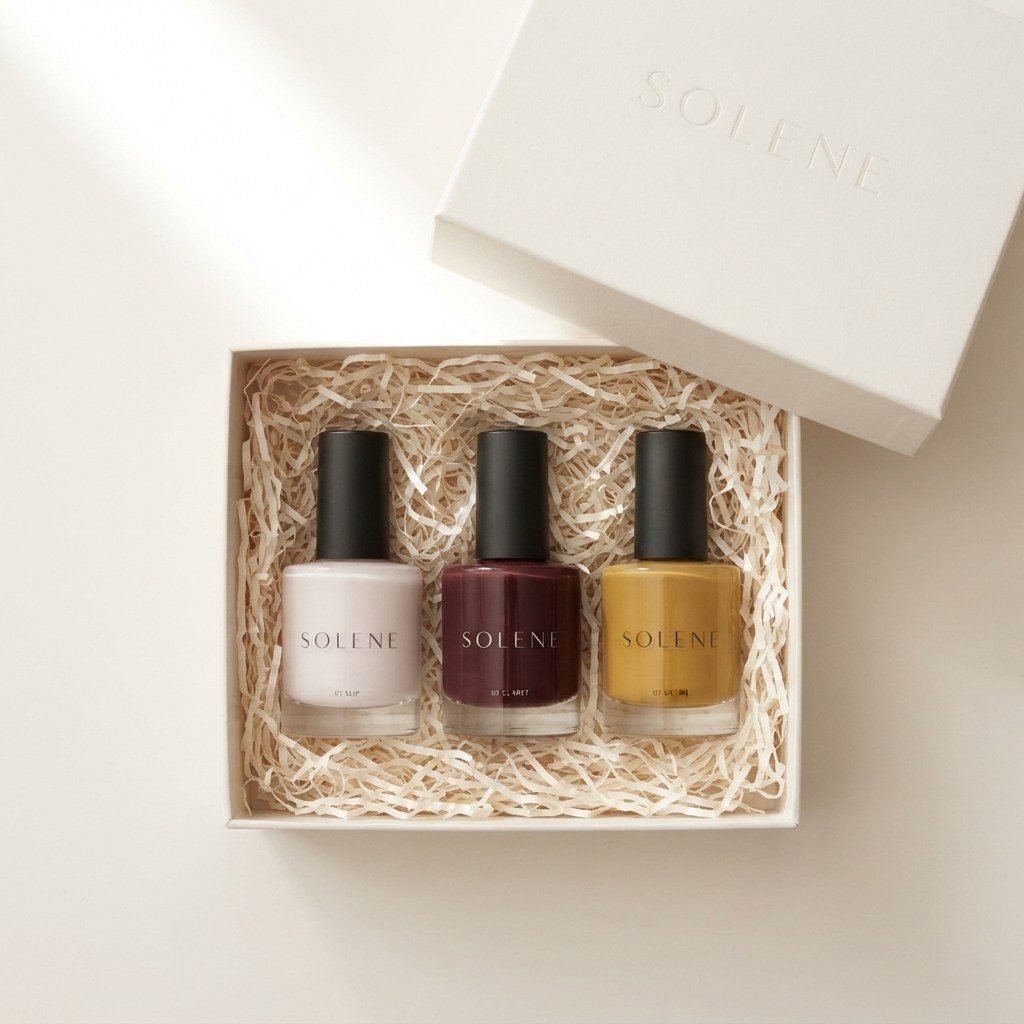
The setThree products that were photographed separately, styled into one box.
What do you actually end up with?
Every product in the set shot to the same specification, the set itself as one image, and the copy for a waitlist page. The three products below were made one after another, each one built from the one before it. That is why they look like a range.
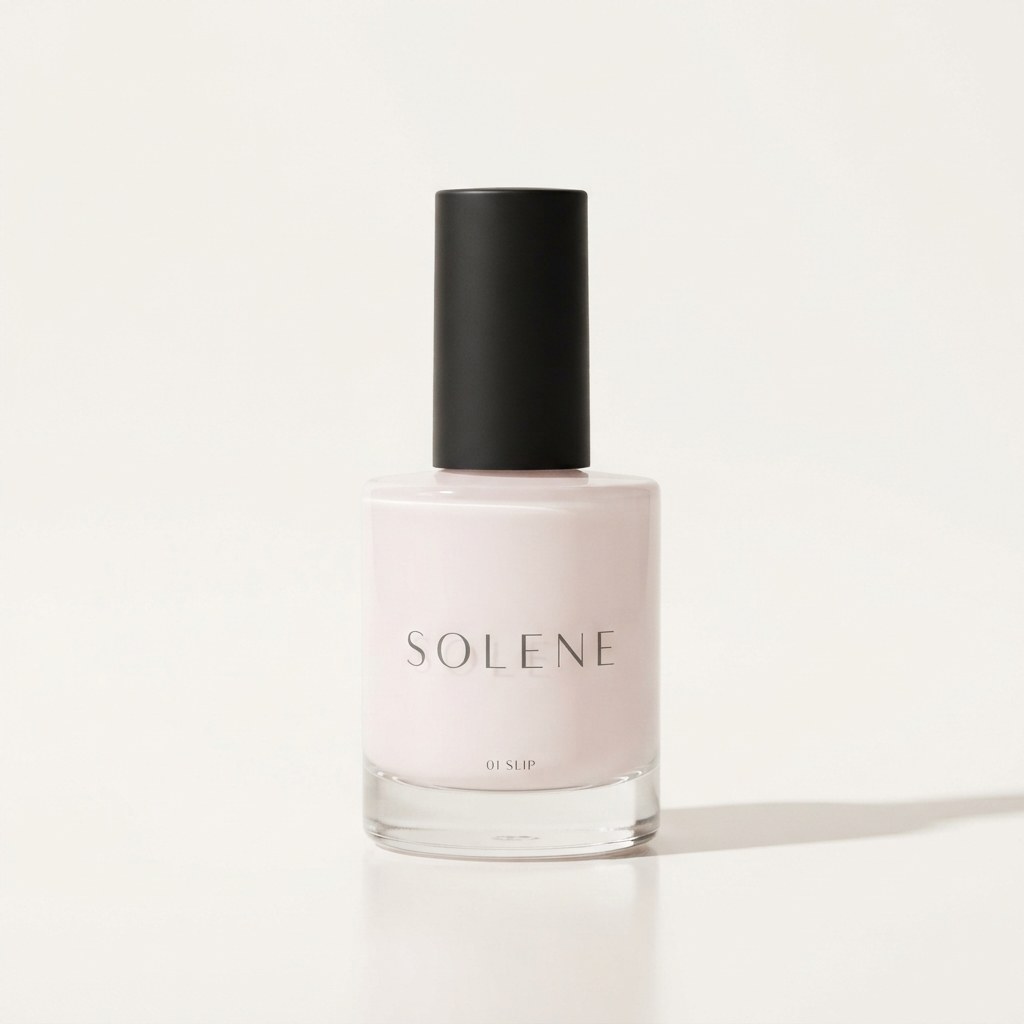
Product oneShot first. Sets the rules.
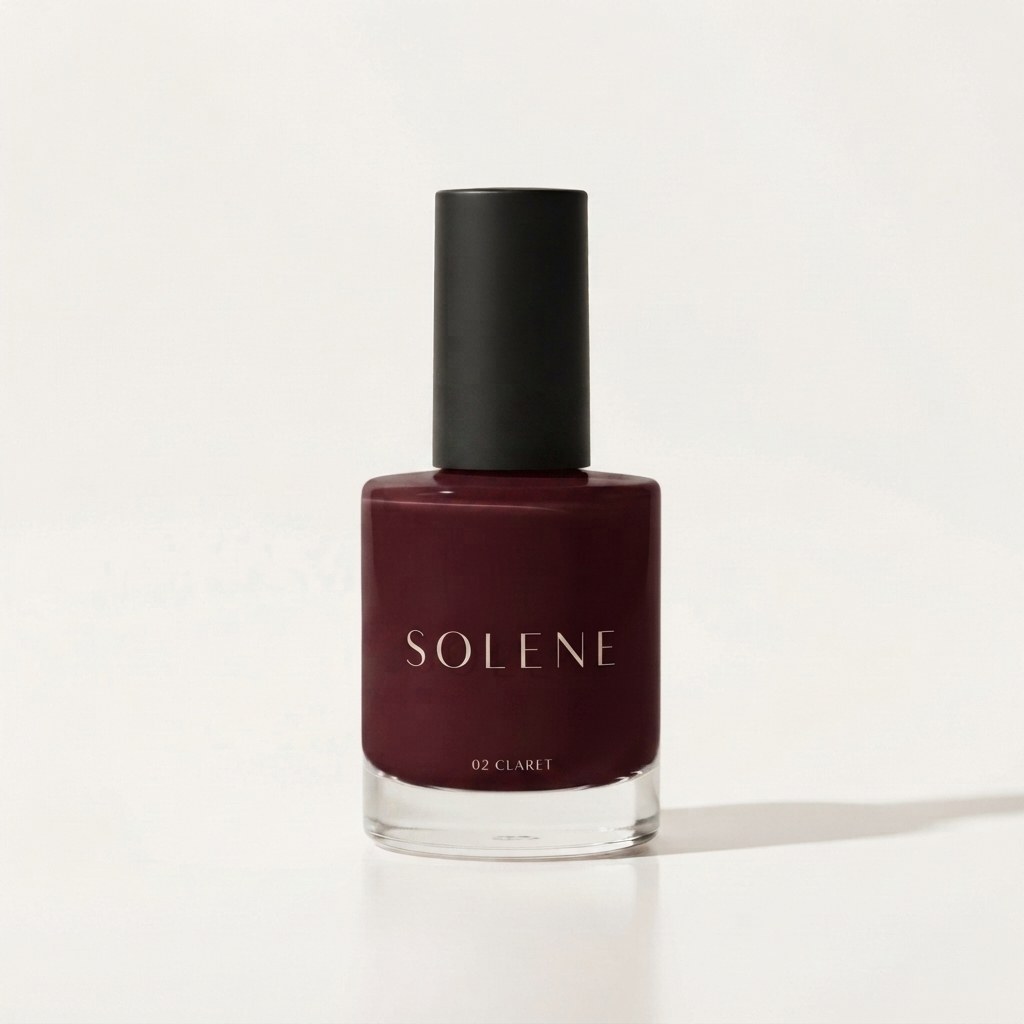
Product twoBuilt from product one.
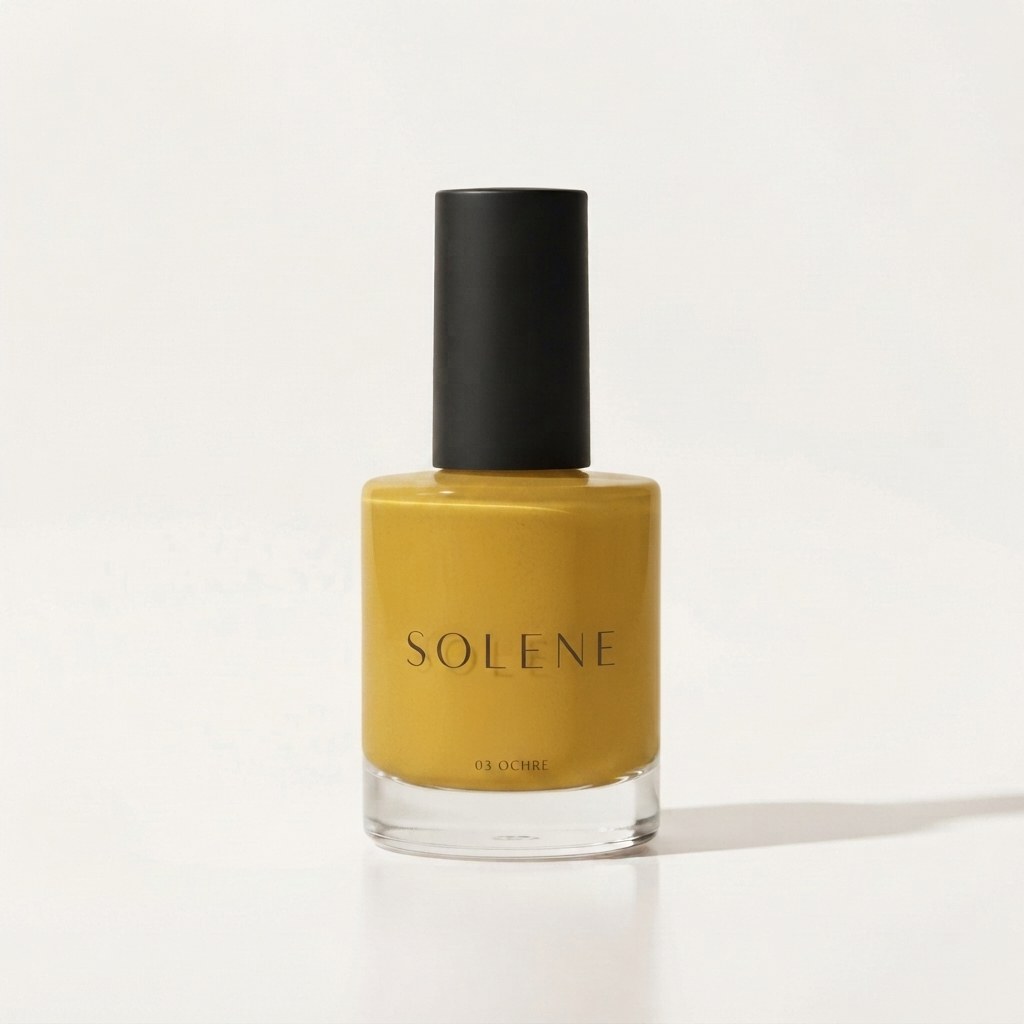
Product threeSame bottle, same light, same type.
The whole thing on one page
| Step | What you do | How long |
|---|---|---|
| 1 | Write your brand sheet, once | 5 min |
| 2 | Get the first product in the set right | 5 min |
| 3 | Build every other product from that one | 3 min each |
| 4 | Put them all in the box | 5 min |
| 5 | Write the waitlist page and post it | 10 min |
What you need before you start
- The products you want to bundle, decided. Three is the standard set. Two feels thin and four gets expensive to box.
- One clear photo of each product, or the link to each product page.
- The hex code of every color in the set. Your designer has these, or your website does.
- Somewhere to send people. An existing waitlist page, a landing page, or the link in your bio.
What is a brand sheet and why does the set fall apart without one?
A brand sheet is six lines that say what your product looks like, what it sits on, and how it is lit. Without it, every image you ask for is a fresh interpretation, and a set of three fresh interpretations is not a set. It is three photographs of three different brands.
Write it once. It goes at the top of every prompt after this, unchanged. Here is the one behind every image on this page, with brackets for your own.
The three shades named in the brand sheet. Naming the hex code is what stops a burgundy drifting purple between one image and the next.
How do you shoot the first product in the set?
Slowly, because everything else copies it. Get the framing, the light and the type right on this one and the rest of the set is a two-line instruction each.
How do you make the rest of the set match?
You point at the image you just made and name the two things that change. This is the step that separates a set from a pile of photographs, and it is the one most people skip.
How do you put them in a box that does not exist yet?
You describe the box the way you would brief a printer. Material, finish, how the name appears on the lid, and what is inside it holding the products. The products themselves come from the images you already made, so nothing gets redesigned on the way in.
Do you need a second angle? Optional
One image tests demand. A second one gives you something to cut to in a video or a carousel, and it is the same prompt with the staging changed.
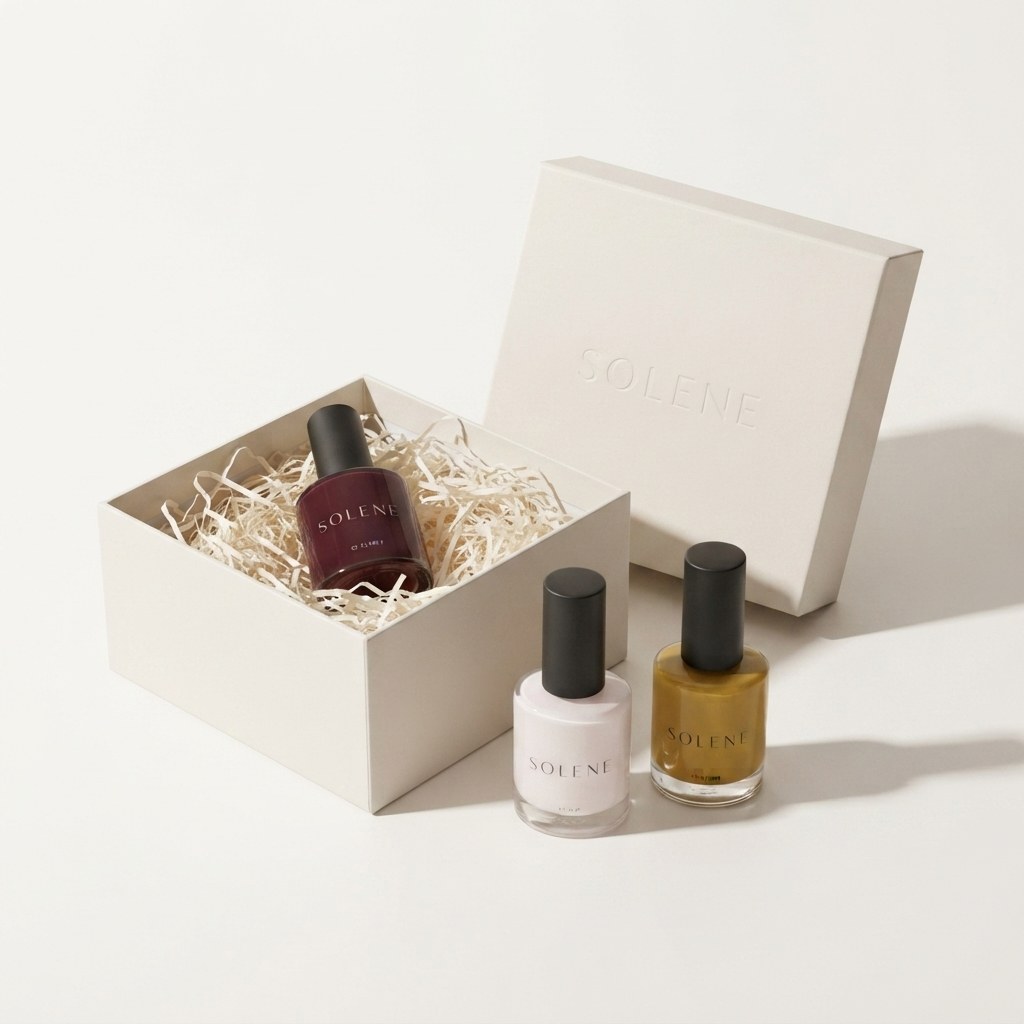
The second angleSame box, same products, restaged. Nothing was described again.
How do you turn the image into an actual demand test?
Put it on a page that collects an email and says plainly that the set is a concept. Then count. The image is only worth making because it lets you ask the question before you pay to answer it.
The prompt chain, in order
| # | Prompt | What comes back |
|---|---|---|
| 0 | The brand sheet | Nothing. It is pasted above every prompt below |
| 1 | The first product | One product shot that sets the rules for the set |
| 2 | Every other product | A matching shot per product, run once each |
| 3 | The gift set | All of them in the box, as one image |
| + | The second angle | A second staging of the same set |
| 4 | The waitlist copy | Page, confirmation email and the social line |
Things that make the difference
Build the second product from the first, never from the brief. Pointing at the image you already have holds the bottle, the light and the type still. Describing the same product a second time gives you a second product.
Give it the hex code, not the color name. "Burgundy" drifts toward purple across three images. "#5A1B29" does not.
Brief the box like a printer, not like a mood board. Material, finish, how the name is applied, and what the products are sitting in. Four specifics beat any amount of adjective.
Say what is not allowed in the picture. Ribbons, glitter, greenery and hands turn up uninvited in anything described as a holiday set, and one line in the brand sheet keeps them out of every image.
Decide the sign-up number before you post. A demand test you score afterwards is not a test, it is a justification.
The checklist
- Brand sheet written, with a hex code for every color in the set
- First product approved before any other product is made
- Every other product built by pointing at that first image
- Box described by material, finish and how the name is applied
- Set image checked at thumbnail size on a phone
- Page says plainly that the set is a concept
- Sign-up target written down before the post goes out
- Real photography replaces the concept image before anyone can pay
Can you photograph a gift set before the packaging exists?
Yes, and it is the cheapest decision you will make all quarter. A gift set is your existing products plus a box, and the box is the part you have not paid for yet. You describe the box the way you would brief a printer, the products come from your own product photos, and what comes back is a set image good enough to put on a waitlist page. You are not faking a product you cannot make. You are looking at a combination you could make, before you commit the money to it.
How do you make three separate products look like one set?
Build the second one from the first, not from your description. Get one product right, then say to use that image as the reference, keep the shape, the type, the camera angle, the background and the light exactly the same, and change only the color and the name. Describing the same product twice gives you two different products, because every fresh description is a fresh interpretation. Chaining each shot off the one before it is what makes them read as a range instead of three separate photographs.
What goes in a brand sheet if you do not have brand guidelines?
Six lines. The brand name and how it prints on the product. The packaging shape and the cap. Every shade or variant with its name and its hex code. The surface and background color. The light and its direction. And what is not allowed in the picture. That is enough to hold an entire set together, and you write it once and paste it at the top of every prompt after that. Most brands already have all six answers, they have just never written them in one place.
Do you have to tell people the gift set image is not a photograph?
Say what stage the set is at. Concept, pre-order or shipping. That is the disclosure that matters commercially and it is also the one that protects you, because a waitlist for a set you have not produced is a very different promise from a product page. Label it as a concept while you are testing demand, and replace the image with real photography before anyone can pay for it. Trading on an image of a box that never gets made is how a brand loses a customer permanently.
How do you know whether the bundle is worth producing?
Decide the number before you post, not after. Write down how many sign-ups in how many days would make you place the packaging order, then put the set in front of the audience you already have and count. The answer is useful either way. A set that clears your number gets produced with the demand already proven, and a set that does not clear it has cost you an afternoon rather than a minimum order quantity of boxes sitting in a garage.