Wholesale is the revenue channel most direct-to-consumer brands never open, and the reason is almost always the same. A buyer says send me your line sheet, and there isn't one.
So the brand sends a lookbook, or a link to the website, or a folder of photos. All three get ignored, because none of them let the buyer do the one thing she opened the email to do, which is work out whether she can make money on your product and how small an order she can start with.
Below is a line sheet built end to end, with every prompt written so you can paste it and fill in your own product. It takes an afternoon, and the only file you need before you start is a folder of photos you almost certainly already have.
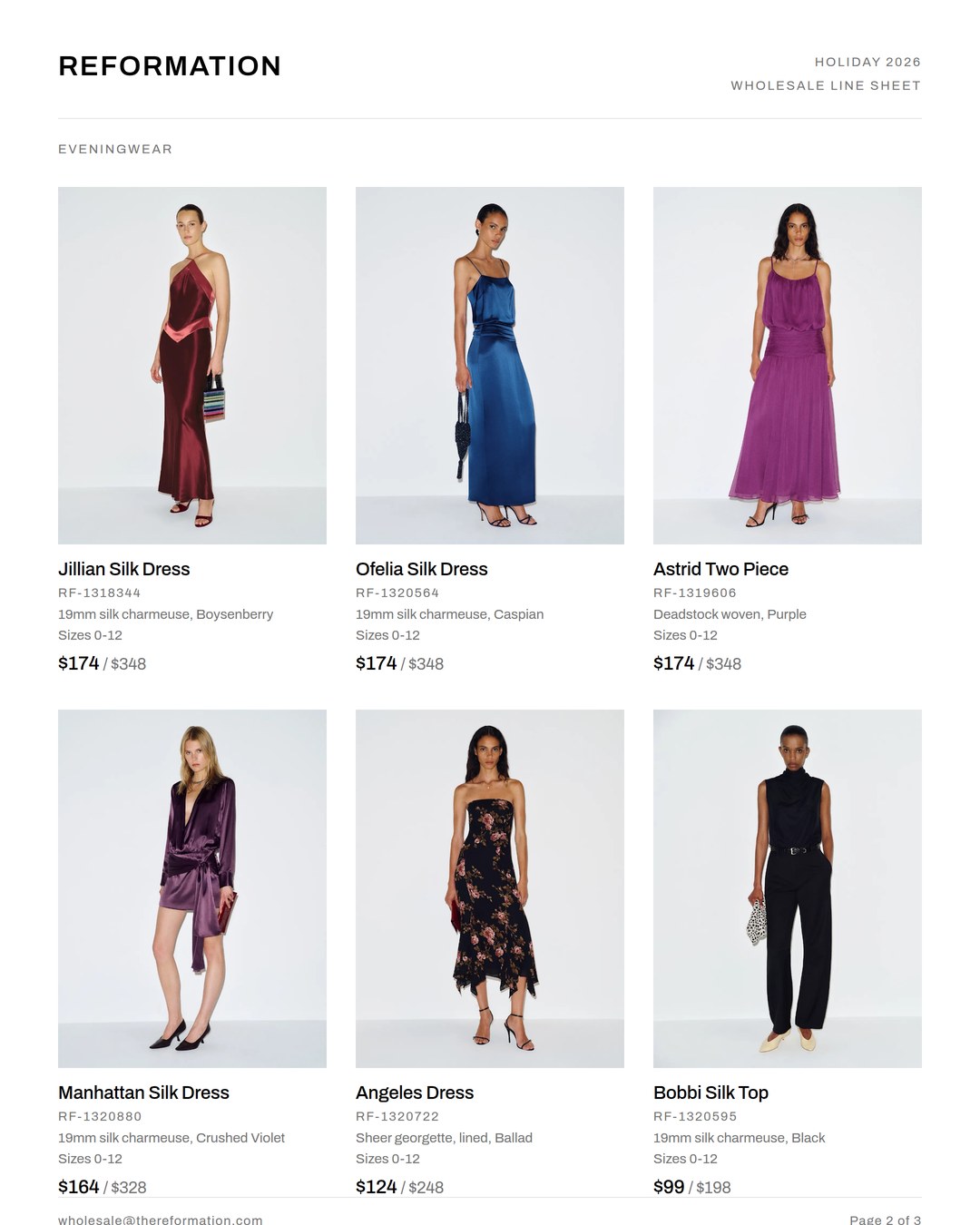
The finished sheetSix looks a page, wholesale price first, retail second.
What do you need before you start?
Less than you think. Three things, and you probably have two of them already.
- One photo per style, in one folder. Full product, shot the same way every time, on a plain background. Your existing product page images are usually fine. They do not need reshooting.
- Your retail prices. The numbers already on your website.
- Your costs. Not for the sheet, but so you can tell whether you can survive selling at half.
You do not need a designer, a template, or a subscription to line sheet software. You need Claude and an afternoon.
One thing to sort out before anything else. Wholesale means a store buys your product at roughly half of what it sells for. That is the standard, it is called keystone, and it is not negotiable in most categories. If your margin cannot survive being halved, the line sheet is not your problem and building one will not help. Work that out first.
What is a buyer actually looking for?
Four things, in this order. She is not browsing. She is answering questions.
- Will this sell in my store? The photograph answers this, and only the photograph.
- What does it cost me and what do I make on it? Wholesale price and retail price, side by side.
- When does it land? A delivery window with real dates.
- How little can I commit to? Your opening order minimum.
Every element on the page earns its place by answering one of those four. If it does not, take it off. That single rule is what separates a line sheet that gets ordered from a deck that gets closed.
The five steps
In order. Each one is a single message to Claude.
Step oneHand over the photos and let Claude interview you
Do not start by describing what you want. Start by letting Claude find out what it is missing. The questions it asks are the fields a buyer would have asked you for anyway, and it is much cheaper to answer them now than to discover a blank column at the end.
Step twoBuild the spreadsheet, before any design exists
This is the step that decides whether the whole thing works, and it is the one people skip because a spreadsheet is not the exciting part. The spreadsheet is the record. The PDF is only a picture of it.
Ask for the math to be recomputed rather than copied. It sounds like a small distinction. It is the difference between a sheet with one wrong price on it and a sheet without one, and a buyer who finds a pricing error stops trusting every other number on the page.
Step threeAdd your terms, and have them argued with
Terms are where most first line sheets fall apart, usually because the numbers on them have never been tested against each other. An opening minimum of five thousand dollars means nothing if your smallest sensible order comes to two.
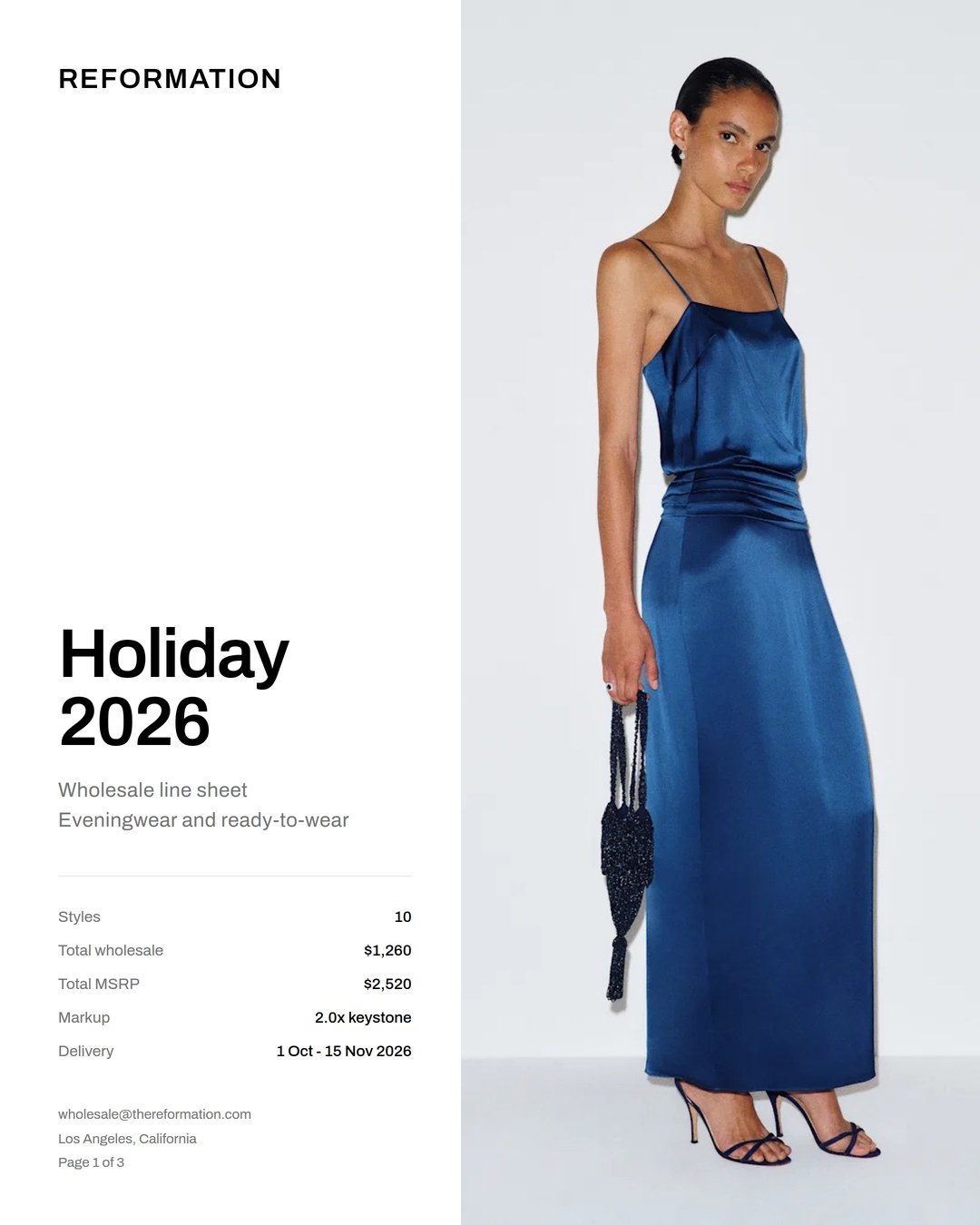
The coverSeason, totals, delivery window. A buyer knows the size of the decision before page two.
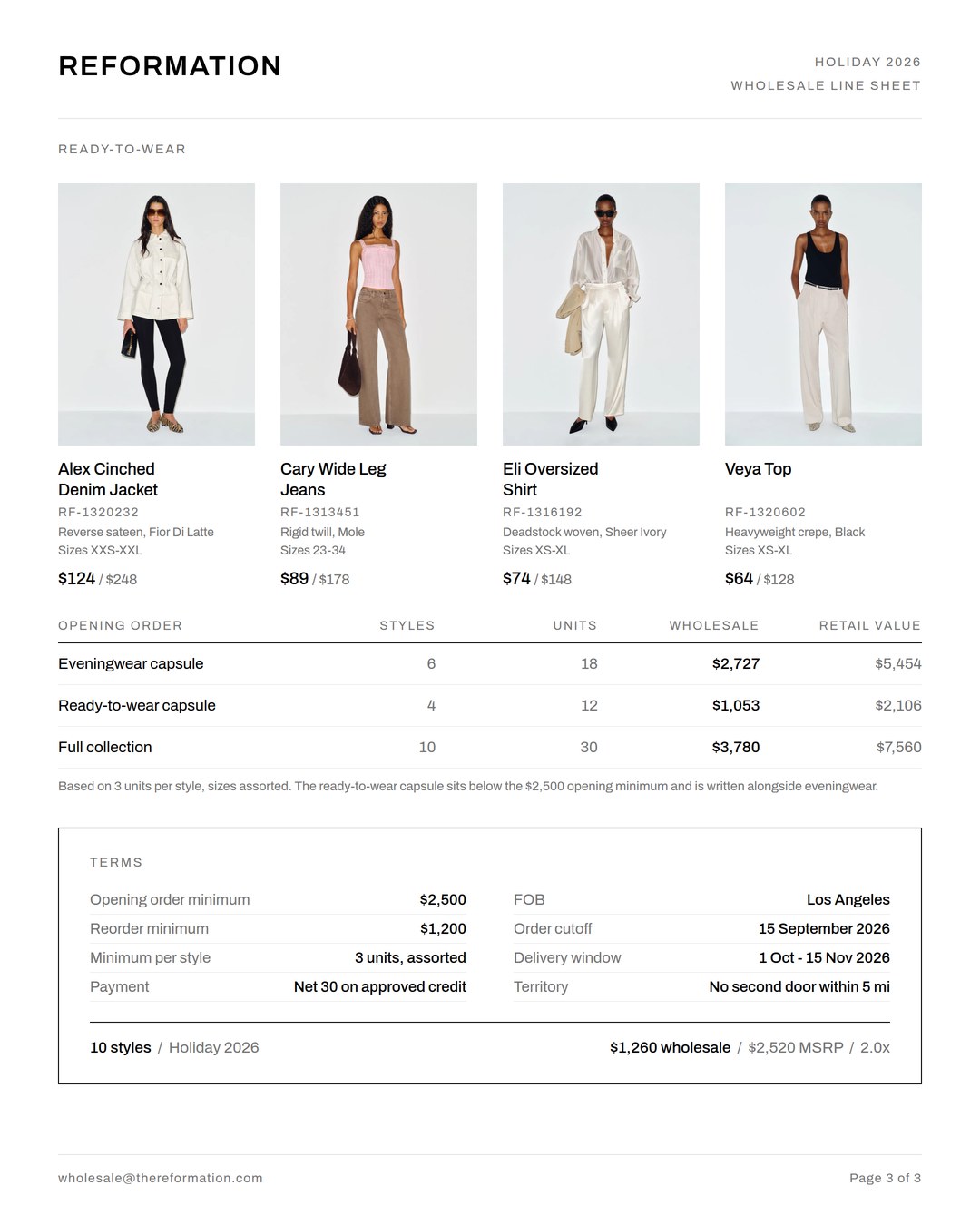
The terms pageMinimums, payment, cutoff, delivery. Everything she needs to say yes.
Step fourTurn the spreadsheet into the PDF
Now, and only now, the design. Notice that the prompt tells Claude to read the numbers from the file rather than retype them. That instruction is doing real work.
Wholesale price first and retail second is not a style preference. The buyer reads left to right and the first number she needs is her cost. Making her hunt for it is a small friction, and small frictions are what turn a maybe into a no reply.
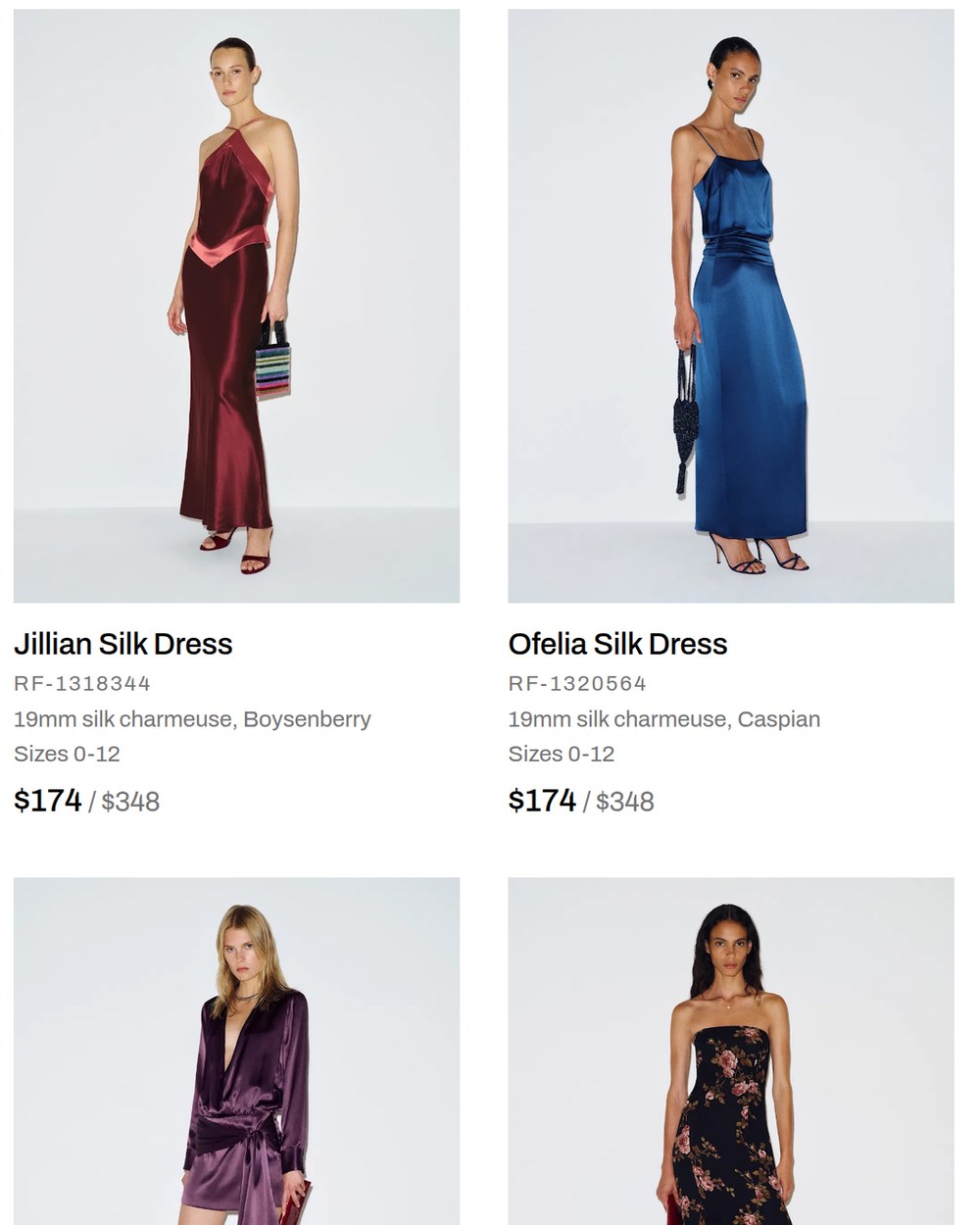
The caption block, up closeWholesale in black and first. Retail in grey and second.
Step fiveHave it read back to you as the buyer
You cannot proofread your own line sheet, because you already know what everything means. So have it read cold, by someone with ninety seconds and no patience.
Ask to be shown the results, not told they passed. It is a habit worth building into every prompt where a number matters.
What makes the difference?
- Spreadsheet before design. The data is the product. The PDF is a picture of the data. Build them in that order and you can update next season in ten minutes instead of starting over.
- Wholesale first, retail second. Her cost is the number she came for. Put it first and make it the bolder of the two.
- Six looks a page, never seven. Seven is where a buyer's eye stops reading and starts skimming.
- No lifestyle photography. Full product, plain background, shot the same way every time. Save the campaign imagery for the lookbook.
- Dates or it is unorderable. A line sheet without an order cutoff and a delivery window cannot be acted on, so it will not be.
- Never let a fabric be guessed. If you do not know a composition, leave it blank and find out. A wrong fiber content on a line sheet is a returned order.
What does this replace?
A freelance designer builds a line sheet for somewhere between a few hundred and a couple of thousand dollars, and the real cost is not the invoice. It is that you have to go back to them every time a price moves, a style sells out, or a season turns over. So most brands build one, let it go stale, and quietly stop pitching stores.
Owning the spreadsheet is what breaks that. Prices change, you edit a cell and regenerate. A buyer asks for a version without the eveningwear, you have it in a minute. The document stops being a project and becomes a file, which is the only form in which it stays current.
One honest limit. A line sheet gets you considered, it does not get you stocked. What gets you stocked is a product a buyer believes her customer will pay for, at a price that leaves her a margin. The sheet's whole job is to make that judgment easy to make. It cannot make the judgment come out in your favor.
What is a wholesale line sheet?
It is the order form a buyer works from. One page per group of products, each style shown with a photograph, a style number, the fabric, the colorway, the size run, what it costs her wholesale and what she sells it for. At the end sits a block of terms: your minimums, your payment terms, and when the goods land. It is not a lookbook and it is not a campaign. A lookbook makes a buyer want your brand. A line sheet lets her write the order without emailing you a single question.
What do you put on a wholesale line sheet?
Everything a buyer needs to answer four questions, and nothing else. Will this sell in my store, which the photograph answers. What does it cost me and what do I make on it, which the wholesale and retail prices answer. When does it land, which the delivery window answers. How little can I commit to, which the minimums answer. If an element on the page does not serve one of those four, take it off. Brand story, mission statements and lifestyle photography all belong somewhere else.
How do you price wholesale?
The apparel standard is keystone, which means the retailer doubles your price. Your wholesale price is half of the retail price, so a dress that sells for 348 dollars in a store is 174 dollars to the buyer. Some categories run higher multiples and some buyers ask for more than keystone, but half is the number to start from and the one a buyer expects to see. The important part is that you can still make money at half, because that is the price your business now runs on.
Should a line sheet be a PDF or a spreadsheet?
Both, and in that order. Build the spreadsheet first, because it is the record. It holds every style, price and size run, it is what you edit next season, and a buyer's operations team can filter and reorder from it. Then generate the PDF from that spreadsheet, because that is what actually gets emailed and looked at. If you design the PDF first you end up retyping numbers into a layout, and retyped numbers are where pricing errors come from.
How many products should go on one page of a line sheet?
Six, and never more than six. A buyer is looking at dozens of line sheets and gives yours about ninety seconds. Six looks to a page leaves enough white space that her eye keeps reading. At seven she stops reading and starts skimming, and a skimmed line sheet does not turn into an order. If you have thirty styles, that is five pages, and five clean pages beat three crowded ones every time.
The line sheet shown on this page was built as a demonstration using Reformation's publicly published product photography and retail prices. Reformation is not a client of mine and I am not affiliated with the brand. The wholesale prices, minimums and trade terms on the example are illustrative and are not Reformation's.